
In a quiet corner of Hertfordshire, England—just outside London—a seemingly unremarkable field hosts one of the world’s longest-running agricultural studies.
Launched in 1843 by Victorian landowner John Bennett Lawes, the experiments aimed to improve wheat yields. Lacking modern data tools, researchers preserved samples of grain, straw, and soil in glass bottles—creating a treasure trove of environmental history now housed at Rothamsted Research.
What began as a study of soil and fertilizers has evolved into a startling archive of human impact on the Earth. Some samples from the 1940s and ’50s contain radioactive particles from nuclear testing. But now, another pollutant has emerged: microplastics.
According to Andy Macdonald, the “Keeper of the Bottles” at Rothamsted, traces of plastic started appearing in samples from around the 1920s, with a notable spike after the 1960s. These microplastics likely settled in the soil through airborne pollution and wear from machinery like tractor tires.
How Much Plastic Are We Consuming?
Estimates suggest people might be consuming tens of thousands of microplastic particles annually, though exact numbers vary. These tiny fragments are now found in saliva, blood, breast milk, organs like the liver and brain—and even within human bones.
A global study in 2024 revealed a sixfold increase in microplastic consumption since 1990, particularly in regions such as the U.S., China, North Africa, and Scandinavia. Despite growing concern, understanding how these particles affect our health remains a major scientific challenge.
A First-of-Its-Kind Human Trial
In early 2025, a groundbreaking experiment took place in London. Eight volunteers consumed beverages containing microplastics in controlled settings. Funded by the Minderoo Foundation, the trial aimed to mimic common exposure methods, such as drinking tea brewed with plastic-sealed bags or heating food in plastic containers.
Stephanie Wright, the lead researcher from Imperial College London, said the study’s goal was to trace how much plastic enters the bloodstream and where it ends up. Initial results are expected later this year and could provide key insights into typical exposure levels after everyday activities.
From the Gut to the Brain
The body’s ability to break down or eliminate plastic particles is limited. Researchers suspect that once inside, microplastics may accumulate in organs and trigger chronic inflammation or scarring—potentially impairing organ function.
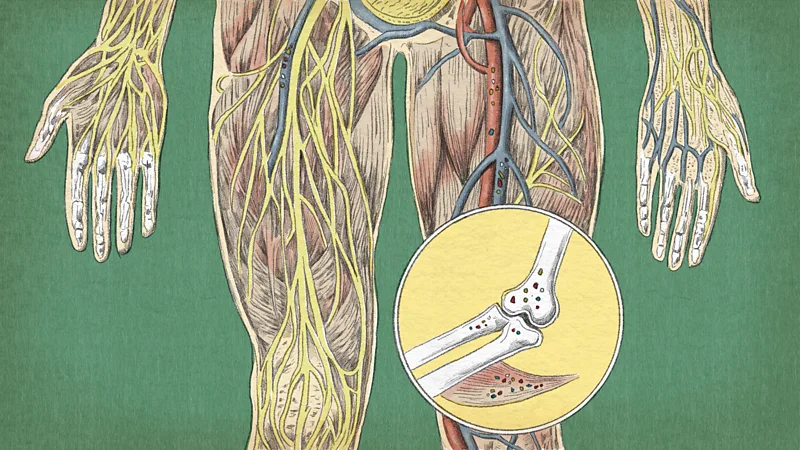
In 2024, Chinese scientists found microplastics in human muscle and bone tissue from joint replacement surgeries, raising concerns about their impact on mobility and tissue health. Other studies have detected plastic particles in the carotid arteries—blood vessels that supply the brain—of people with early cardiovascular disease. Those with plastic-laced arterial plaques were found to have a 4.5 times higher risk of heart attacks, strokes, or sudden death over three years.
Then in February 2025, researchers from the University of New Mexico discovered microplastics in the brains of deceased individuals. Those who had suffered from dementia had up to ten times more plastic than those without the condition. Lead scientist Matthew Campen speculates that plastic particles may ride into the brain on lipids—the fats it uses for energy—particularly in patients with impaired blood-brain barriers.
Chronic Exposure and Inflammation
Though these findings are troubling, researchers caution against drawing direct cause-and-effect conclusions. Instead, many believe microplastics may act as an additional stressor, exacerbating existing health risks rather than initiating disease alone.
Professor Fay Couceiro from the University of Portsmouth explains: “They’re not like asbestos that causes a clear-cut disease. But they may stress cells, impair function, and increase the risk of illness over time.”
A Complex Threat with Many Faces
Studying microplastics is no simple task. A single liter of bottled water can contain up to 240,000 particles—spanning different plastic types, shapes, and chemical makeups. According to Dr. Verena Pichler from the University of Vienna, this complexity makes it nearly impossible to pin down universal health effects. Some plastics carry heavy metals or toxins, while others disrupt hormonal systems. Nanoplastics, which are even smaller than microplastics, can infiltrate cells and linger inside.
Microplastics also serve as a platform for antimicrobial resistance genes, which can transfer to bacteria and reduce drug effectiveness. Couceiro is currently researching this in Antarctica, a region with low background resistance levels, by examining plastic pollution from cruise ship wastewater.
Are Microplastics Accelerating Aging and Disease?
Professor Raffaele Marfella in Naples believes microplastics may be accelerating aging by damaging blood vessels, promoting long-term inflammation, and altering cell behavior. His lab is testing various plastic doses on artificial blood vessels made from human cells to identify safe exposure thresholds. Early results from animal models suggest even small daily doses can cause inflammation and metabolic issues.
Health status may also play a role in how people respond to microplastics. Older adults or those with chronic conditions could be more vulnerable, especially those with respiratory diseases like asthma or COPD. Couceiro’s team is analyzing air quality in patient homes and testing mucus samples to understand if plastic particles contribute to symptom flare-ups.
Can We Make Plastics Safer?
One goal for Couceiro and other researchers is to collaborate with manufacturers to reduce harmful exposures. For instance, hospital equipment such as plastic tubing and oxygen masks may need redesigning to minimize risk. Understanding which plastics pose the greatest health threats could lead to safer alternatives in critical environments.
“There’s plastic in your air while you sleep,” Couceiro says. “We’re not going to eliminate it overnight, but we need to understand how to minimize harm—especially for those who are already at risk.”
