
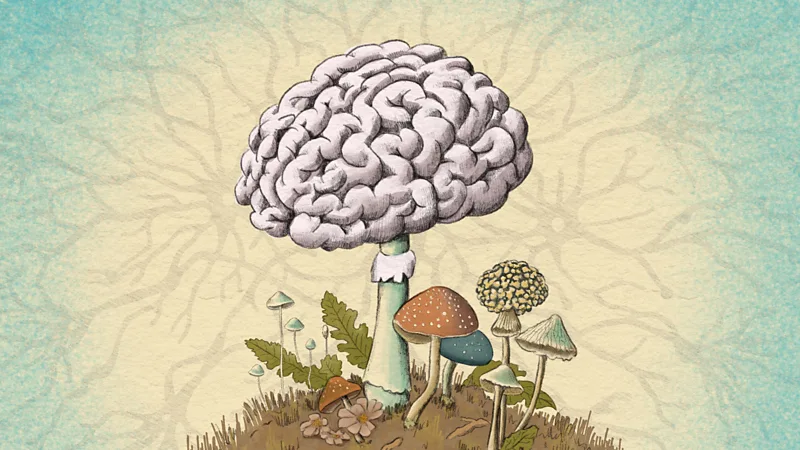
Often overlooked, fungi may play a far more significant role in human health than previously understood.
Our bodies are home to an astonishing array of microscopic life forms, including countless fungal species. These organisms inhabit our skin, mucous membranes, and digestive tract—coexisting with bacteria and other microbes. Some fungi are passed from mother to child at birth, while others enter our bodies through the air we breathe or the food we eat. Yeast in bread, fungal spores in the air—our exposure is constant. While many are quickly neutralized by our immune defenses, some become persistent residents.
Recently, researchers have started to investigate the intriguing ways fungi might affect not only our physical health but also our brain function and behavior.
Although it’s well established that fungi can cause serious brain infections, emerging research suggests they might also play a subtler, ongoing role in neurological conditions. While far-fetched ideas like fungi “controlling” humans—as seen in shows like The Last of Us—are scientifically implausible, experts are seriously considering whether these microbes could be linked to diseases like Alzheimer’s or shifts in mental health.
According to microbiologist Matthew Olm from the University of Colorado Boulder, some fungi might even support human health by enhancing immune responses or promoting wound healing. “Fungi are definitely an essential part of being a healthy human,” he says.
But fungi can also become harmful. Rebecca Drummond, a fungal immunologist at the University of Birmingham, notes that infections can occur when harmful fungi are introduced from the environment or when native species grow uncontrollably due to imbalances in the body.
Though rare, fungal infections of the brain do happen. Protective barriers like the blood-brain barrier usually prevent fungi from reaching the brain, but rising numbers of people with weakened immune systems—due to HIV, cancer treatments, or organ transplants—have made such infections more common. Aspergillus and Cryptococcus, both inhaled from the environment, are known culprits. Others, like Candida albicans from the gut, may also invade and cause toxic damage once in the brain.
Cryptococcus, in particular, can form mass-like growths in the brain, sometimes leading to devastating consequences. Survival rates are low, and even those who recover from fungal brain infections often face lasting neurological damage, such as vision problems or memory loss.
Now, scientists are investigating whether fungi might play a role in long-term cognitive diseases like Alzheimer’s. Molecular biologist Richard Lathe from the University of Edinburgh has found instances where people diagnosed with Alzheimer’s showed improvements after receiving antifungal treatments. He believes microbes might frequently enter the brain but are typically managed by a healthy immune system. As immunity weakens with age, these microbes could build up and cause inflammation and nerve damage.
Lathe and others propose that amyloid plaques—long associated with Alzheimer’s—might be the brain’s response to microbial invaders rather than the root cause of the disease itself. Some research on mice supports this theory: when the immune system is suppressed, fungi like Candida can reach the brain and trigger inflammation.
Skeptics like Olm caution that microbial traces found in brain tissue might be contamination, not proof of infection. But ongoing studies, including ones showing fluorescent-tagged bacteria entering the brains of fish, suggest the brain isn’t as impenetrable as once thought.
Meanwhile, research is also beginning to explore whether fungi in the gut could affect behavior and mental health—even without reaching the brain directly. In one study, mice with Candida in their intestines became more socially active. Scientists speculate that immune responses triggered by the fungi may influence brain function through chemical signaling.
Human studies are still in their infancy, but some researchers have found differences in gut fungal communities in individuals with mental health conditions like depression, bipolar disorder, and schizophrenia. One study by neuroscientist Emily Severance at Johns Hopkins linked Candida exposure to reduced cognitive function in women with schizophrenia. However, she emphasizes that correlation does not equal causation—those with mental illness might simply be more susceptible to Candida overgrowth.
The question of whether fungi influence the brain remains unresolved. “Fungi are clearly important,” says Drummond, “but we’re only beginning to understand how.”
With the spotlight long focused on bacteria, it’s becoming increasingly clear that fungi may deserve far more attention in our quest to understand human health—especially when it comes to our minds.
ALSO READ : As Lithium Demand Soars, Atacama Locals Face Water Shortages and Ecological Strain
