
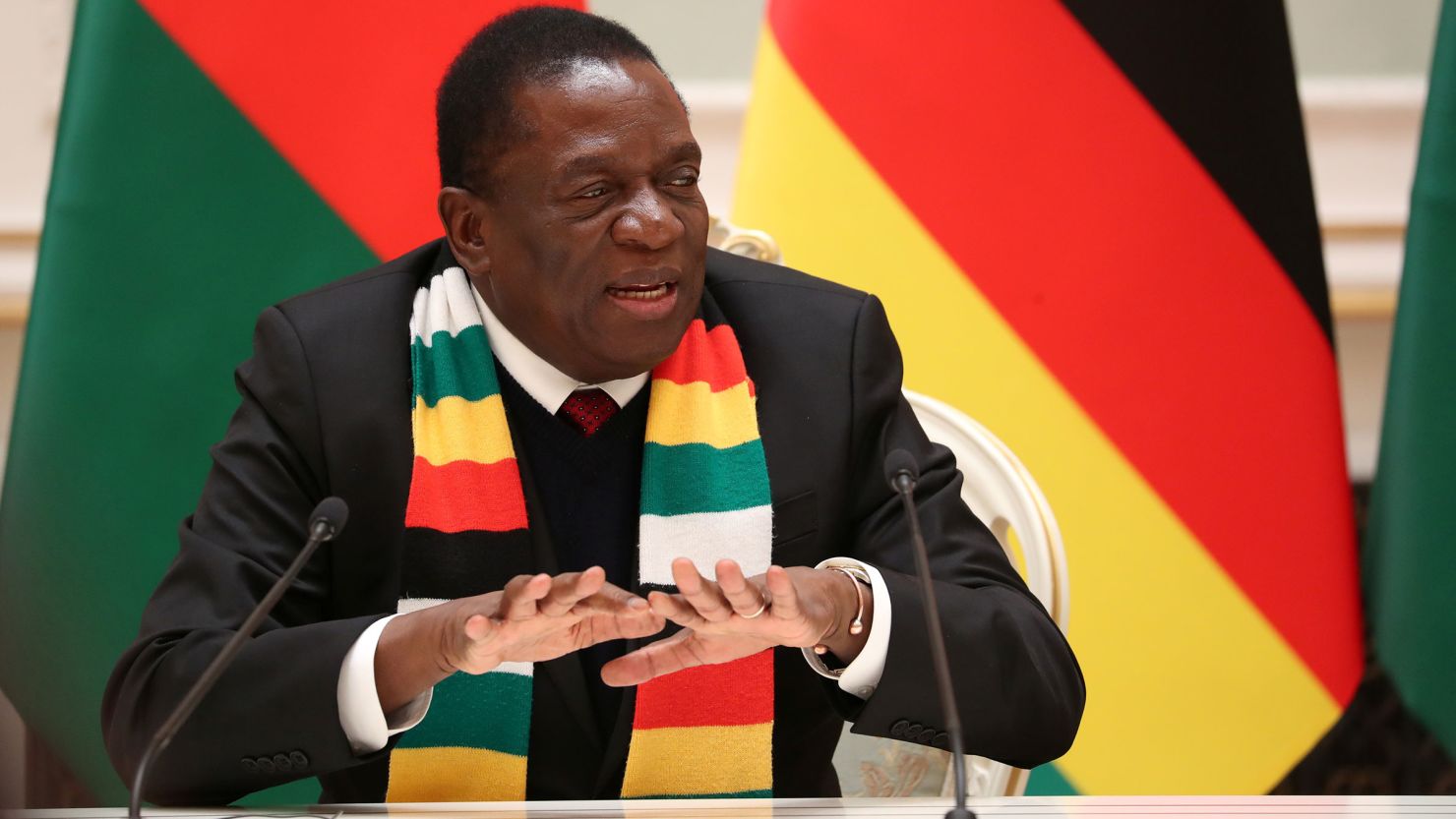
President Emmerson Mnangagwa is set to lead an urgent politburo session today, notably in the absence of Vice President Constantino Chiwenga, as indications grow that businessman Kudakwashe Tagwirei’s appointment to ZANU-PF’s Central Committee will be expedited.
Chiwenga, currently on an official visit to India, reportedly opposed Tagwirei’s inclusion during a previous politburo meeting, citing procedural irregularities in the nomination process.
Tagwirei—believed by some within ZANU-PF to be Mnangagwa’s preferred successor—recently attempted to participate in a Central Committee meeting following his controversial co-option by the party’s Harare provincial leadership.
Last month, ZANU-PF’s secretary for legal affairs, Patrick Chinamasa, suggested on social media that Tagwirei’s appointment was a done deal. However, the Harare provincial executive, led by Godwills Masimirembwa, only formally endorsed Tagwirei over the past weekend to fill a Zone 5 vacancy in Mabvuku.
Chinamasa’s public remarks conflicted with those of ZANU-PF spokesperson Christopher Mutsvangwa, who previously dismissed Tagwirei’s nomination, condemning the alleged use of wealth to secure party positions.
According to insiders, today’s meeting is a critical moment in the unfolding succession battle within ZANU-PF, which has intensified with the growing influence of a faction aligned with Tagwirei—unofficially referred to as the “Zvigananda” group. This faction is believed to be maneuvering to sideline Chiwenga’s camp in the lead-up to the 2027 party congress.
Some within the ruling party are pushing for Mnangagwa to remain in office until at least 2030 to clear the path for Tagwirei’s political ascent, despite Mnangagwa publicly committing to stepping down at the end of his term in 2028.
At the same time, ZANU-PF-aligned groups recently floated the idea of life presidency for Mnangagwa—a move seen as an attempt to entrench loyalty to the current leadership and derail alternative succession narratives.
Chiwenga, who led the 2017 military coup that deposed Robert Mugabe, was once considered Mnangagwa’s natural successor. His political standing has shifted, however, after publicly challenging the growing influence of a clique of wealthy businessmen surrounding the president.
Today’s meeting was officially confirmed via a memo issued by ZANU-PF Secretary for Administration Obert Mpofu, dated August 25, 2025.
Party sources claim that the meeting was quickly arranged following a weekend of intense internal lobbying aimed at securing Tagwirei’s seat in the Central Committee and solidifying control for the Zvigananda-aligned bloc.
“This emergency politburo gathering is designed to legitimize a deeply flawed process while VP Chiwenga is out of the country,” a politburo insider told NewsDay. “They’re seizing the opportunity to push it through in his absence.”
Reports suggest that the current political strategy was formulated during a “strategic retreat” in Japan after Mnangagwa’s return from Madagascar, where he officially handed over the SADC chairmanship. His chief secretary, Martin Rushwaya, was part of the delegation.
“The Japan trip was essentially a war room,” a source said. “What you’re seeing now is the first phase—taking full control of party structures for Tagwirei’s benefit.”
Further signs of this campaign surfaced at a ZANU-PF event in Mazowe on Monday, disguised as the launch of a land tenure programme, which critics called a political rally. Mnangagwa praised the initiative, aimed at issuing over 300,000 title deeds to farmers—despite warnings from analysts that it could reverse key aspects of the original land reform.
At the same event, Justice Minister Ziyambi Ziyambi proclaimed that Mnangagwa would remain in office “until Jesus comes.”
Tagwirei also announced that beneficiaries of the title deeds would qualify for a US$6,000 “interest-free loan” to purchase irrigation kits from his businesses. Detractors argue these kits are grossly overpriced and the scheme amounts to forced purchases disguised as loans.
“This is exploitation wrapped in state-sanctioned populism,” a ZANU-PF official claimed. “People are being handed fake title deeds and coerced into buying inflated products from Tagwirei’s companies.”
Veterans of Zimbabwe’s liberation struggle have taken the issue to court, challenging what they label as Tagwirei’s “illegitimate” land tenure committee. The case remains unresolved five months later.
Meanwhile, political analyst Mbizvo Jelousy Mawarire told South Africa’s SABC that the programme is a thinly veiled effort to introduce private land ownership—contrary to Zimbabwe’s constitution, which states that agricultural land is owned by the state.
ALSO READ : Tsenengamu Seeks Reentry Into ZANU-PF After 5-Year Expulsion
