
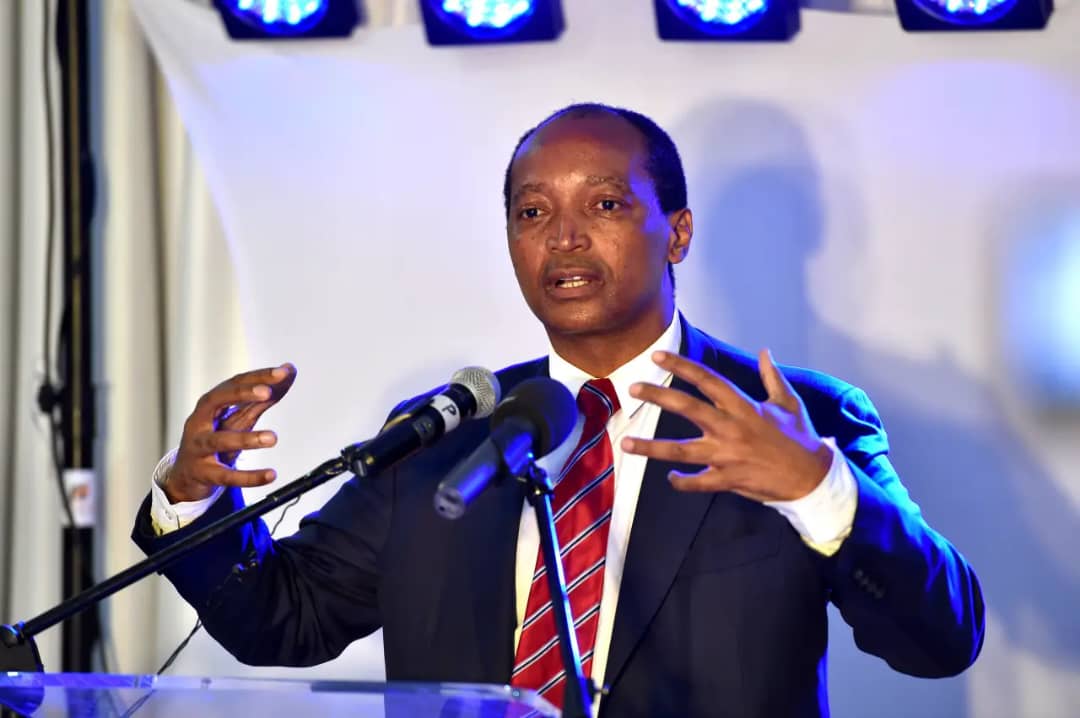
Patrice Motsepe’s continued decision to stay clear of the African National Congress’ succession debates is neither shyness nor political calculation. Instead, it reflects a deeper truth about a movement struggling to define itself in a changing political landscape.
The persistent focus on Motsepe says far more about the ANC than it does about him. His name surfaces not because he has expressed interest, but because the party appears unable to generate leaders who inspire confidence from within its own ranks. In that sense, his absence has become more revealing than any declaration of intent ever could.
For years, moments of crisis within the ANC — scandals, internal divisions, or electoral losses — have triggered the same response. Analysts and influential voices begin searching for a figure seen as clean, capable, and removed from internal decay. Motsepe is repeatedly elevated as that imagined solution, not through ambition, but through contrast with the party’s existing leadership class.
This recurring pattern points to a profound internal weakness. In functional political organisations, leadership contests are anchored in internal structures, ideological debates, and proven constituencies. Within the ANC, succession has increasingly become speculative and externally focused, as if credibility can be sourced from outside rather than rebuilt through internal renewal.
Motsepe thus becomes a symbol of what the party believes it lacks: integrity, competence, and independence. His appeal lies less in concrete political positions and more in what he represents against a backdrop of eroded trust.
This crisis, however, is not about a shortage of capable South Africans. It is the product of a political culture that rewards factional loyalty over governance ability, ethical leadership, or public accountability. When a party’s most discussed potential leaders are individuals who have never sought office within it, the problem is structural, not personal.
Motsepe’s perceived suitability also rests on his distance from the state. His success has not been built on political patronage or access to public contracts, allowing him to be imagined as a corrective to blurred boundaries between power and wealth. In a society fatigued by corruption and cronyism, that distinction carries weight.
Yet this image is largely aspirational. Motsepe has become a projection of public frustration and elite longing for stability without disruption. The desire for a “safe” reformer reflects anxiety about systemic failure, coupled with reluctance to confront its root causes.
By declining involvement, Motsepe quietly dismantles this illusion. His refusal highlights an uncomfortable reality: the ANC is inhospitable to actors who operate outside entrenched factional networks. Entry into its leadership structures demands early compromises that undermine independence and reformist credibility.
Leadership battles within the party are less about ideas or competence than about alliances, resources, and reciprocal obligations. For someone whose authority derives from autonomy and external reputation, the risks far outweigh the potential influence.
The ANC’s complicated relationship with business further exposes this tension. While once cautious of capital due to its liberation roots, the party’s post-apartheid engagement has often produced transactional relationships rather than principled partnerships. Business leaders are drawn in as financiers or beneficiaries, not as architects of reform.
Motsepe does not fit neatly into this arrangement. His independence makes him appealing symbolically but threatening structurally. A leadership role for him would signal reform, yet disrupt entrenched interests that depend on the status quo.
His refusal suggests a clear understanding: without deep organisational change, even respected leadership would be constrained and likely neutralised.
This challenge is not unique to the ANC. Across the world, once-dominant liberation movements grapple with declining legitimacy, internal decay, and succession crises. Outsiders are rhetorically courted but institutionally blocked. Renewal becomes a struggle for survival rather than reinvention.
As the ANC approaches its 2027 elective conference, the outlook remains troubling. Another compromise figure may emerge, bound by competing factions and unable to impose direction or discipline. Organisational strength may endure, but moral authority will continue to weaken.
Motsepe’s refusal should therefore be understood not as a lost opportunity, but as a moment of clarity. It exposes the limits of personalised rescue myths and redirects attention to the party’s internal architecture — its incentives, culture, and accountability mechanisms.
Credible leadership cannot be imported. It must be grown through transparent processes, ethical renewal, and genuine reform.
In declining to participate, Motsepe has already made his contribution. His repeated and measured “no” has illuminated the distance between the ANC’s present reality and the future many South Africans still hope for.
Whether the party can bridge that divide on its own remains the unanswered question.
