
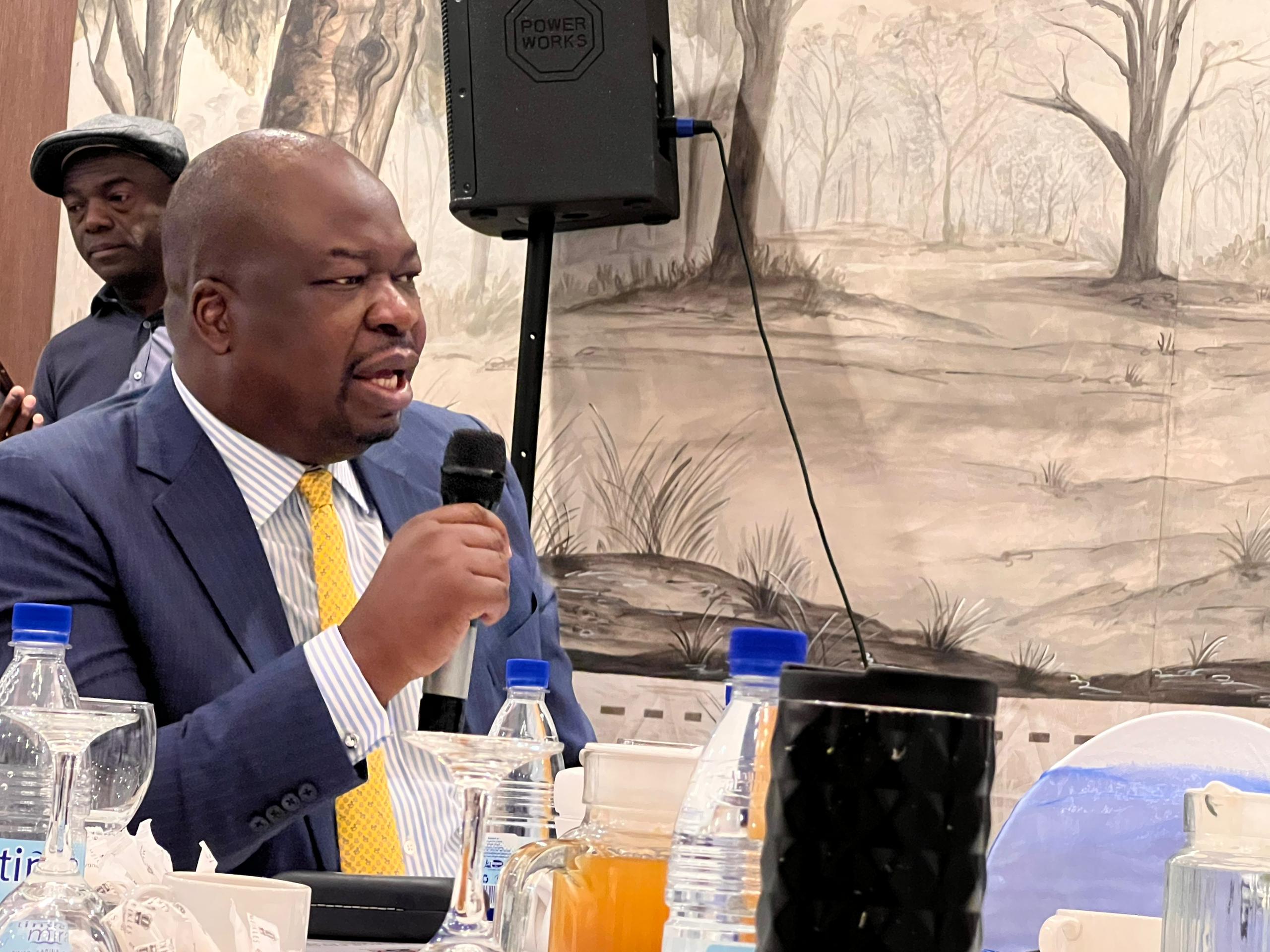
Finance Secretary George Guvamatanga has explained that the Intermediated Money Transfer Tax (IMTT) was introduced to capture revenue from the informal sector while allowing established companies to make it tax-deductible.
Speaking recently, Guvamatanga emphasised that IMTT has now evolved into a structural component of government policy, embedded across industries including fuel, finance, and technology.
“We introduced IMTT to capture information. It’s a blunt instrument, but it helps monitor transactions that would otherwise go unrecorded. Over time, it provides the government with insights and revenue,” he said.
Guvamatanga noted that the tax’s introduction was intended as a provisional measure, with plans to refine it over time.
“We will continue to work on it, but IMTT is now very much part of policy and the political standard. Most associations today already account for it, and many operators in finance and related sectors are implementing it,” he added.
He further highlighted that IMTT is already operational and in use across various platforms, particularly in post-finance transactions.
“After taking this action, it’s not just a statement—it’s already implemented. The framework is in place, and we are very close to reviewing whether certain charges can be removed to bring prices down for the community,” Guvamatanga said.
The Finance Secretary’s remarks underscore the government’s ongoing efforts to broaden its revenue base, formalise the informal sector, and ensure that taxation policies support economic growth while protecting consumer interests.
