
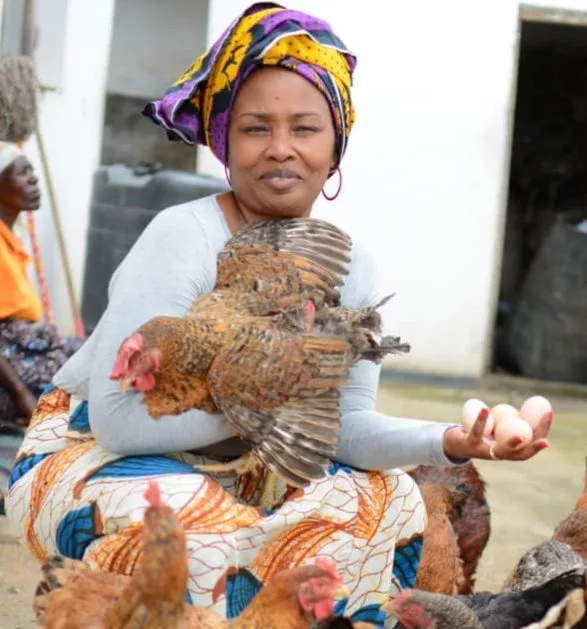
A.K.M. Glitters Poultry Company from Tanzania is demonstrating how young Africans can turn agribusiness into reliable employment and a pathway to food security. The company’s transformative impact took center stage during a youth agribusiness webinar hosted by the Food, Agriculture and Natural Resources Policy Analysis Network (FANRPAN) and facilitated by Dr. Rachel Mkandawire, the network’s Policy and Research Analyst.
Dr. Mkandawire emphasized that the webinar series aims to equip African youth with mentorship, real-world success stories, and insights into lucrative agricultural value chains—ultimately nurturing a new generation of agripreneurs capable of driving sustainable food systems across the continent.
From Backyard Project to National Agribusiness Leader
Founder Elizabeth Swai began AKM Glitters as a typical household poultry project with just 250 chickens.
In the early 2000s, she started buying day-old chicks from local farmers, fattening them, and selling them as meat—an initiative that laid the groundwork for a formal enterprise.
After years of humanitarian work with the UN World Food Programme (WFP) and the UN High Commissioner for Refugees (UNHCR), Swai officially registered AKM Glitters in 2007. Her experience in food systems helped shape the company’s people-centered business model.
Today, the company has grown into a modern operation featuring:
A 120-metric-ton-per-day feed mill
A licensed hatchery producing broiler chicks suited for local conditions
A nationwide supply network serving both smallholder farmers and commercial producers
A Mission to Empower Youth and Women
Empowerment is central to AKM Glitters’ work. The company supports youth and women in launching poultry businesses—an effort backed by research showing high profitability potential when systemic challenges are removed.
One of the biggest barriers is access to credit. Swai revealed that AKM Glitters negotiated two financing contracts with local banks, enabling:
75% of loan value at zero interest
Youth to pay only application fees
The remaining 25% covered through de-risking funds from donors or government partners
This financing model is turning previously excluded youth into profitable, bankable agripreneurs.
Innovating Through Contract Farming and Climate-Smart Solutions
In 2024, AKM Glitters launched a contract farming program that sources feed ingredients directly from smallholder farmers—reducing production costs while boosting rural incomes.
The company is also investing in climate-smart agriculture, including:
Black soldier fly farming for waste recycling and protein production
Eco-friendly briquettes that reduce reliance on charcoal
AKM aims to scale from 600 engaged farmers today to 6,600 farmers within four years
Development Wing: A Blueprint for Inclusive Rural Growth
AKM Glitters’ Development Wing is redefining rural development in Tanzania. The initiative operates through:
* 580 women agents
* Reaching over 1.2 million smallholder poultry keepers nationwide
This community-based system integrates nutrition education, women’s empowerment, and youth livelihoods.
In 2024 alone, 340 youth were engaged across brooders, fattening, slaughtering, and value-addition clusters. Each youth supports 50–150 smallholder farmers, amplifying economic benefits.
The company also partners with Mercy Corps to support naturalized refugees in Tanzanian settlements.
Particular attention is given to young mothers—many earning TSh 500,000 to 700,000 (about USD 226) monthly after training as brooders.
“We train them to become brooders,” said Swai. “They sell their chickens every month and earn a profit. We work not just with smallholders, but also with displaced communities.”
Experts Call for Improved Support Systems for Young Agripreneurs
Speakers in the webinar echoed the critical importance of youth inclusion in agriculture.
Elie Mandela,Youth Lead at the Mastercard Foundation, applauded programs that create dignified, fulfilling work for youth, noting agriculture’s resilience during the COVID-19 pandemic and its continued relevance in the evolving job market.
Dr. Mwaka Namukonda, Coordinator of CAYACC,highlighted urgent gaps that must be addressed—including financial literacy, tailored incubation, and access to digital tools. She stressed the need to modernize tertiary curricula for careers in:
* Smart farming
* Climate-resilient agriculture
* Agri-tech and digital innovation
“From automated feeding systems to mobile apps for veterinary support and e-commerce,” she noted, “we need to empower youth with the right tools to innovate and lead.”
A Model for Africa’s Agribusiness Future
AKM Glitters stands today as a testament to what strategic support, inclusive financing, and community-centered development can achieve. Its model—rooted in empowerment, innovation, and sustainability—is providing a roadmap for how Africa’s youth can transform agribusiness into a viable, dignified, and scalable economic opportunity.
