
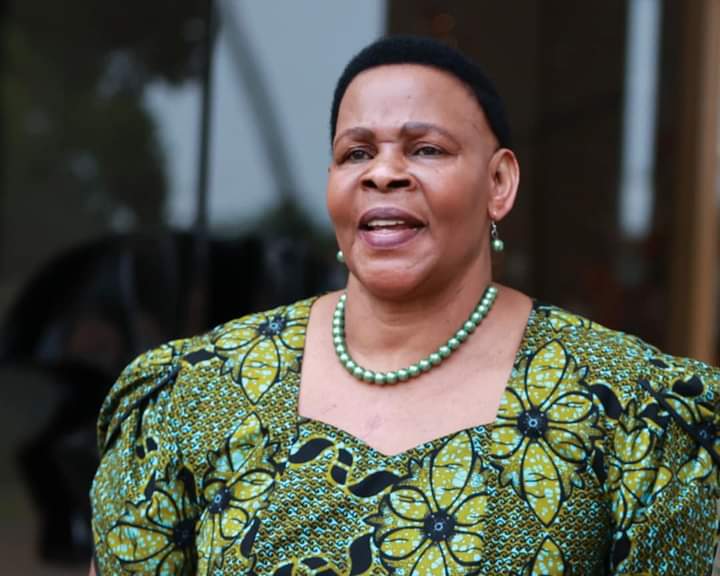
An investigation by the Centre for Innovation and Technology (CITE) has revealed that Zimbabwe’s Parliament used close to US$400,000 in public funds to renovate the private home of Senate President Mabel Chinomona, purchasing high-end household fittings and undertaking major construction works outside prescribed procurement procedures.
Financial records accessed by CITE indicate that a total of US$372,260 was spent on the Borrowdale residence through a series of payments made to selected suppliers without competitive tendering, despite the amounts exceeding legal procurement thresholds.
The expenditures were flagged in the Auditor-General’s 2023 and 2024 reports, where Auditor-General Reah Kujinga raised concern that Parliament deliberately bypassed procurement regulations, creating conditions conducive to abuse of public resources.
Former Finance Minister Tendai Biti has since demanded a comprehensive forensic audit of Parliament, warning that the institution charged with overseeing public accountability is itself compromised.
“If Parliament, which is meant to provide oversight, is engaging in corruption, then the question becomes: who is left to hold anyone accountable?” Biti said.
According to the audit findings, Parliament authorised at least five separate payments, each above US$20,000, without inviting competitive bids, in direct violation of procurement law.
The single largest payment—US$116,000—was made between June and August 2022 for the demolition of an existing boundary wall and construction of a new one at Chinomona’s residence. The amount exceeded the threshold requiring open tendering.
Earlier, between February and March 2022, Parliament directly contracted a supplier to deliver furniture and décor valued at US$57,874, including chandeliers, lampshades and ornamental flower vases. The applicable procurement limit for such items was US$10,000, according to the Auditor-General.
Additional expenses included US$60,587 for bedroom furnishings, covering multiple bed sets, premium pillows and bedroom fittings, with payments made in February and March 2022.
Parliament also spent US$72,795 on kitchen furniture and appliances, purchasing items such as refrigerators, washing machines, a microwave, an air fryer, a kettle and a rice cooker.
One of the most notable expenditures was US$64,000 for curtains installed throughout the property, including lounges, bedrooms, a home office, staff quarters and service areas. Once again, procurement limits were ignored.
In response to audit queries, Parliament defended its decision to use direct procurement, arguing that suppliers were chosen for “artistic and qualitative reasons.” However, the Auditor-General dismissed this explanation, cautioning that the absence of competitive bidding undermines value for money and transparency.
Following the tabling of the audit reports, the Public Accounts Committee (PAC) summoned senior parliamentary officials to explain the transactions. The officials initially resisted the summons and later requested that the hearings be closed to the media, citing the presence of “sensitive information.”
CITE later obtained receipts related to the questioned payments and identified the companies that benefited from the contracts.
Biti said the issue should be viewed within a broader political framework, arguing that increased funding to Parliament is linked to its potential role in shaping the controversial 2030 agenda, which seeks to extend President Emmerson Mnangagwa’s tenure.
“Parliament has increasingly been used to shield corruption and frustrate accountability processes,” he said.
Zimbabwe Coalition on Debt and Development (ZIMCODD) executive director John Maketo said the revelations seriously erode public confidence in state institutions.
“Parliament must set an example by strictly complying with public financial management laws. These findings severely damage its credibility,” Maketo said, while commending the Auditor-General for consistently exposing systemic financial misconduct.
Parliament has previously faced scrutiny over procurement practices. In 2022, public outrage followed revelations that Blinart Investments had been awarded a contract worth US$1.6 million to supply 173 laptops at approximately US$9,200 each, while another firm supplied desktop computers at US$3,000 per unit.
Although the PAC investigated allegations of kickbacks after lower bids were overlooked, no disciplinary action followed.
The 2024 audit report also exposed fuel abuse within Parliament, revealing that senior officials in Speaker Jacob Mudenda’s office were allocating themselves fuel far beyond authorised limits.
CITE reached out to Senate President Mabel Chinomona and Clerk of Parliament Kennedy Chokuda for comment, but both declined to respond
